Showing posts with label Hormuz. Show all posts

Saturday, April 19, 2014

LEONE PANETTA, FORMER US SECRETARY OF STATE : AGGRESSIVE ACTION AGAINST SYRIA NEEDED


US SECRETARY OF STATE LEONE PANETTA
ABU DHABI (APRIL 23, 2013) The Editor of the ECSSR Website Dr. Adil Rasheed was granted exclusive audience with former US Secretary of State Leon Panetta on the sidelines of his lecture – The US Defense Budget: Repercussions for US Global Commitments – delivered on April 22, 2013 at the Sheikh Zayed bin Sultan Al Nahyan Hall, ECSSR office complex in Abu Dhabi.

During the interview, the veteran statesman warned Iran against intimidating countries in the region and spoke on vital issues such as implications of latest terrorist bombings in Boston, the Palestinian-Israel two-state solution and the US Congressional impasse over the debt ceiling. Following are excerpts of the interview:


Q: The UAE and the US are very close allies. Some people in the UAE wish there was more coverage in the Western world — in the media and in the political space — about Iran’s occupation of the three UAE islands. Iran does not seem interested in addressing the issue. What are your views on this matter?

A: We are very strong allies and partners with the UAE and we have worked together on intelligence issues and we have built one of the strongest relationships and we strongly support the UAE and its claims and we work with the UAE and try to make sure that should Iran take any steps to close the Strait of Hormuz we would do whatever we can to defend against that. We think it is extremely important that Iran understands that not only the world community but all the Gulf nations are unified in making clear to them that they cannot intimidate other countries in this region, that they ought to abide by international rules and international requirements.

Q: There is a perception that even if the current regime in Iran leaves the scene, Iran would continue with its controversial nuclear program as Iranians see it as a symbol of national pride. Do you see the pressure on Iran over its nuclear program would persist even if there is a more agreeable dispensation in place?

A: The whole emphasis has been to urge Iran to abide by international rules and standards. There have been situations where they have violated UN resolutions, they clearly have proceeded with enrichment in violation of international rules. If they want to join the international family, if they want to abide by the rules that we all follow in the international family, then that’s something we are prepared to discuss and work on.

When it comes to the peaceful use of nuclear power there are many countries which are abiding by the requirements. There is no reason why Iran cannot do the same thing, but the first thing for us is to be able to negotiate the fact that they cannot proceed to highly enrich fuel because that creates the danger that they will use that fuel in order to create a nuclear weapon. That is unacceptable. The world has made it clear that that is unacceptable and it is in Iran’s interest to try to resolve this issue, if they fail to resolve it peacefully, then make no mistake about it, all options are on the table.

Q. Are we any closer to determining whether the Boston bombings were carried out by ‘lone wolves’ or were they part of a larger conspiracy hatched by terrorist organizations?


A: Well obviously anytime these kinds of terrorist attacks take place, the United States is very concerned about what happened. We certainly will not be intimidated by these kinds of actions, we made clear on 9/11 that we are a resilient country and we will go after those who are trying to attack our people and we have done that against Al-Qaeda and we will do that against any terrorist.

This situation appears to have involved two brothers, whether or not they were ‘lone wolves,’ whether or not anything they did was tied to more organized terrorism, we just don’t know the
answer to it at this point and that is being investigated. But I want to make clear that after 9/11 the United States aggressively went after Al-Qaeda and we decimated their leadership. I think we made clear that we will do everything necessary to ensure that we never again suffer a 9/11 attack. America is safer as a consequence, but we have to be vigilant with regards to other forms of terrorism and one of the dangers I talked about is, when I was the Director of the CIA, is the danger of people who are lone wolves, who are located in the United States and who become self-radicalized because it is very difficult to be able to anticipate that kind of terrorism.

Q: It is said that if the attackers were lone wolves, the implications could be far-reaching, because it will be more difficult to combat the threat of terrorism as it is more daunting to track down small groups. What new measures will the US take in such a scenario and how will it balance it with the values and freedoms on which the great nation is founded?

A: You see, I am the one who does not believe that we have to choose between providing security for our people and our freedom as a democracy. I believe that we can balance both of those in a way that respects our freedom, respects what our Bill of Rights is all about and at the same time take steps to ensure that we go after those who try to attack our country. Coming out of 9/11, obviously steps were taken to allow the government to proceed vigorously in that area. These steps still follow our constitutional rules, they still follow our Bill of Rights but we have been much more aggressive in pulling together intelligence agencies and law enforcement agencies to make sure that we track potential terrorists and we have actually been very successful in going after them. We have deterred a number of potential attacks, through good intelligence we have been able to anticipate some of those who would attack our country, we have to continue to be vigilant, we have to continue to ensure that we have very good intelligence, the very best law enforcement and if we continue to emphasize that I think ultimately we can continue to keep our country safe.

Q: How do you see the crisis in Syria unfolding and what is the current US position on the worsening situation?

A: First of all I have always supported taking very aggressive actions to support the opposition in Syria, I believe that is necessary. The United States has organized an international effort to try to ensure that we provide whatever help we can to the opposition and we are doing that now. We are not only providing humanitarian aid, but we are also working with the opposition very closely, helping to train them, working with other countries that provide support to them so that they can better organize their opposition to the Assad regime. I think this is a critical time that the international community has to provide greater assistance to the opposition so that it has the capability of confronting the Assad forces and ultimately being able to prevail. This is not easy. Obviously, it is difficult. The opposition is divided and it is difficult for them to get to work together. But in recent months, I believe the opposition has done much better at organizing itself and in conducting operations in Syria. We have no choice. Assad has to come down, Assad will come down and the key right now is to ensure that when that happens we have a peaceful transition at that point and so to have that happen we have to exert whatever influence we can to assist the opposition. I believe that that is necessary.

Q: Is the two-state solution still viable and what are your views on Israel-Palestine solution?

A: Experience tells us that this is an issue that is not going to be resolved by itself. The parties are going to have to engage. The United States is going to have to play a key role in trying to arbitrate between the parties and there has to be constant pressure to move the parties toward some kind of an agreement. If we hesitate, if we back off, if we are not involved then make no mistake about it, it will not happen. We have got to be able to pressure both the Israelis and Palestinians to sit down and negotiate this issue. We know what the answers are, we know what steps have to be taken. There is no reason why we can’t get them to move forward and resolve these issues, but it will only happen if the international community and the United States continue to bring pressure on both parties to sit down and negotiate these issues.

Q: Your Excellency, you did not just get Bin Laden when you were Secretary of State but you are also known to have worked on cutting the US deficit under the Clinton administration pretty well. In this respect, are you optimistic that a Grand Bargain would be reached between the two US political parties before the May 31 deadline when the US is expected to hit the debt ceiling? Again, what strains does the US Defense Department feels in wake of budgetary constraints?

A: My experience tells me that there is absolutely no alternative to both parties making a deal with regards to the budget. They have to do that. That means that both sides have to give. When it comes to budget issues, there are only so many areas that you can turn to if you want to reduce budget deficits. You have to deal with entitlements, which now represent two-thirds of the federal budget, you have to deal with raising more revenues and you have to deal with limits on discretionary spending. All three have to be part of the deal. And the reality is that both the Republicans and Democrats are going to have to deal with all three of those areas.

Q: Is there little progress in cutting discretionary spending?

A: We are cutting discretionary spending now, but you cannot balance the budget on just discretionary spending. That’s what is false about what’s happening now especially with this
Panetta on the piano
sequester. When two thirds of the federal budget are made up of entitlement programs you can’t expect to balance the budget on the one-third of discretionary spending that’s involved and at the same time the United States has to maintain a strong defense, we have to maintain strong programs to provide security for people in the United States, that’s what makes us a strong democracy. What is lacking right now is the political will and the political courage to take the steps necessary to get it done. We have the resources to do it, we have the know-how to do it, what it takes now is political courage.


Q: So you think at present there is little hope of an agreement?
A: I tell the students (at The Panetta Institute for Public Policy) that we govern either by

leadership or crisis. If leadership is there we can avoid crisis, if not we are governed by crisis and today we are governed by crisis. Every time we come to a deadline, it creates another crisis. We can’t continue to do that. Through leadership, we have to find the solutions that are necessary. The concern right now is that both parties are in a gridlock. They couldn’t even pass a gun-control measure last week, which only tells you they are not moving toward some kind of consensus.

Q: The US has said that in coming years its defense strategy would focus more on the Pacific. Does that mean it would shift its focus away from the Middle East? Should America’s European partners in NATO and allies in the Middle East be apprehensive?

A: They shouldn’t be because the defense strategy that we put together at the Defense Department made very clear that although we are going to be smaller and leaner in the future, that we still have major responsibilities to deal with and so we said we need to have force projection in the Pacific, but we also need to have force projection in the Middle East. Frankly, that’s what we have now. We have very substantial military presence in both the Pacific as well as here in the Middle East. In addition to that we have to have a presence elsewhere in the world and so when it comes to Europe, Africa or Latin America, what we have to do is engage in what we call is rotational deployments, where we can provide forces that go in and help train, help develop capabilities of other countries, develop alliances and partnerships that allow us to provide security for the world and we very much intend to continue that effort as well.

Q: How do you see the future of warfare, particularly the impact of new technology?

A: The battlefield of the future is in cyberspace. Our financial institutions have been under cyber attack for the past year. One day, one of these attacks may cause serious damage. I have said that the next attack on America, the next Pearl Harbor, could very well be a cyber attack.

Q: Finally, can I ask you if you still play the piano?


Wednesday, April 16, 2014

DR PETER SINGER: LIFE IMITATES SCIENCE FICTION


The Hi-Tech Defense Wizard: Dr Peter Singer
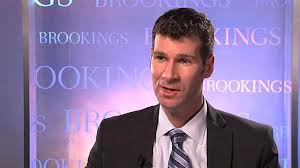
Abu Dhabi (April 14, 2013) In an in-depth interview on emerging developments in warfare and defense technologies, Dr. Peter Singer (the Director of the Center for 21st Century Security and Intelligence and a Senior Fellow in the Foreign Policy program at Brookings) shed light on some of the pressing security concerns facing the GCC region and the need for greater coordination. In the interview – which was conducted by the Website of the Emirates Center for Strategic Studies and Research (ECSSR), on the sidelines of the Center’s 18th Annual Conference – The Future of Warfare in the 21st Century – held on April 9-10, 2013, Dr. Singer also highlighted the introduction of laser technology in US missile defense and other game-changing emerging technologies. Following is the transcript of the interview:

Q1. In your enlightening lecture, you raised very important questions about leadership issues regarding selecting and investing in the right kind of military technologies. What kind of new approaches and technologies should peace-loving countries like many GCC states with relatively small militaries invest in to ward off threats posed by big nations in their vicinity, like Iran, to strike a balance of power?

Answer: I think there are several important issues to be put on the table here. First, while GCC member states are small countries, they do have relatively powerful defense budgets, when you sum them together. So while individually they may not be a match for the size of a large neighbor, like an Iran, collectively that is certainly within their power; particularly when you add in the advantage that they have of being able to purchase high technology.

In most areas, they are a generation ahead of Iran. For example, in terms of jet fighters they are literally a generation ahead. Secondly, they can have partnerships with allies like the US and France that aren’t accessible to a nation like Iran. So that gives them certain opportunities.

The challenge for the GCC, as I see it as a defense analyst from the outside, is a couple of issues. There hasn’t been as much cooperation and coordination as there might be both within the states of the GCC and with their allies, like the US and France. We can see this when it comes to areas like air defense and missile defense, where we still don’t have a well-integrated relationship despite the very clear threat from an Iran, particularly when it comes to missiles.

Another area of cooperation will be if you look for a low level threat from Iran. There is fear that they may not engage in direct hostilities but do something like mine the seaways nearby, which is something they had done previously in their history. And yet we don’t see the kinds of investment being made in mine-detection and mine-clearing at sea by the local states here that might match that threat. The United States, for example, has had to push almost all of its mine-sweeping capacity into the Gulf right now.

The second issue is focusing on spreading out your investments. There is a clear amount of technological change going around in the world today, ranging from the rise of unmanned systems to directed energies etc., and so each of the nations —whether it is the United States or the states of the GCC —have to figure out how to make smart investments. In many ways, like an investor on the stock market, you don’t put all you money in one place but spread out the risks. Again, you particularly don’t put all your money in the thing that is most shiny and most appealing. That’s a challenge, which is facing many militaries and we see that playing out in the market today. So I think that given the amount of transition that is going on, locking into any one program, or locking into any single system is not the way to go. There is enough uncertainty right now that you spread out the risk.

Q2. I would like to know about the benefits of the new laser technology that reportedly would be deployed by the US navy in the Arabian Gulf next year to bring down possible Iranian drones and missiles? The pictures of these weapons show remarkable similarity to Star Warslaser weapons. Is it another case of life imitating science fiction?

Real Life Star Wars
Answer: Lasers, ‘directed energy weapons’ as it is known, has been in the realm of science fiction throughout all our lives and because of that we have imagined it would always stay in that world. Yet it is now becoming real. This pattern is nothing new – we saw the same thing happen with flying machines, which we now call airplanes. We saw the same thing happen with submarines, which first started in science fiction. The tank first featured in science fiction and was originally called the ‘Land Ironclad’ — in H.G. Wells’ short stories. We repeatedly see this and when it comes to directed energy, it is important to pay attention to it because it may — and I emphasize may and not definitely — be a solution to the big challenges that we face, particularly in the region, particularly in the tradeoff of cost when it comes to offense and defense in terms of using rockets and missiles.

So when you are talking about the fear of an Iran shooting missiles into the region, the challenge for the defender is that it has to spend more on its defense to shoot down a missile than the one firing it. So, in the last battle between Israel and Hamas, Israel was spending hundreds of millions of dollars on its Iron Dome Defense System to shoot down hundred-dollar rockets. This cost disparity will be the same situation with Iran shooting missiles and the allies using more expensive Patriot and the THAAD defense programs intercepting and destroying them.

So the ultimate problem is that you get caught in a situation where your enemy can cost impose on you. The benefit of directed energy (lasers) is that it flips the cost equation. The United States and even Germany recently tested rocket defense systems using lasers, which can shoot down an incoming rocket. Even more important than their effectiveness is that it costs roughly a dollar a shot. So now it is your enemy that is spending more than you and moreover with a laser you can fire multiple times. It is something very worthy of investment, and very worthy paying attention to.

On a broader level to your question, science fiction as I mentioned, has always been an inspiration for real world technology and it seems to work in a couple of ways. One is that the scientists themselves, when they are looking for new ideas, often get them from the world of fiction. My favorite example for this is the cell phone. The man who invented the cell phone explicitly talks about how he was sitting in his lab, taking a break from his work, watching an episode of the TV series Star Trek, when he saw the characters using what they called ‘the communicators’ and he thought it would be really neat if we could build something like this. Similarly, Star Trek: The Next Generation inspired digital sound recordings (MP3s) that came from someone watching the 1990s series. There was a robot playing music on his computer and they felt ‘Wow, hold it! That would really be neat if we could do that in reality.’

Q3: Another thing they are trying to invent now from Star Trek is the medical tricoder. Isn’t it?

Answer: Exactly. So, sometimes it is direct inspiration from science fiction. Another fascinating part of it is when the military is looking for things to buy, sometimes science fiction shapes our image of what the future is going to be like, in a way that is persuasive to the military. So, when you meet with defense companies and they talk about how they sell their systems to the military, they tell them “this system is just like it is in Star Wars or Star Trek etc.,” so it allows the military to visualize it and even more see it as something new and futuristic. In a way we can find the same thing in the way that architects sell their buildings, such as the futuristic high rises one sees popping up in Abu Dhabi. They are futuristic, because they match our images of what the future is supposed to look like.

There is another part of science fiction that we should pay attention to, which is that science fiction is not just about giving you ideas about technology. It also talks about the dilemmas — the legal, the moral, the ethical — that come with new technologies that often people forget about.

Q4: Just as the I-Robot talked about some ethical dilemmas and rules?

Answer: Exactly! Science fiction can be an inspiration when it comes to technology, but also a warning and a guide and too often we do not listen to the other part of it. The good example is the atomic bomb. The original idea of the atomic bomb was in a story by H.G. Wells. In it, the author talked about using radioactive materials to build bombs. At the time when H.G. Wells wrote it, most scientists thought this could never happen. But some of them were inspired to build the real world version. However, if we read the story we find Wells describing this world of horror in which entire cities are brought under the threat of this new kind of bomb. He wasn’t writing it as a good thing but he was writing it as a warning of the costs of modern technology and war.

Q5: But then if by the same token we look into laser technology, its devastating potential could be huge. If I am not wrong and if we go by the parallel of the Death Star as in Star Wars, the technology has the potential to annihilate cities and large populations. It could even potentially make nuclear weapons redundant. Isn’t it?

Answer: Maybe, but so far that doesn’t seem to be a possibility for it, because of the limitations of power. Essentially, the energy you are using in a direct energy weapon depends on your power source and we have not yet cracked anything equivalent to a nuclear bomb. So in the ones that they have used so far in testing, it has been good for shooting down rockets, drones and small airplanes. It has not yet reached the capacity to cause a wide-area damage. Now obviously, anything could happen 200 years from now. But for now the reality is that splitting the atom still creates more energy than anything we can store in a battery.

Q6: The old school of military believes that it is the man behind the weapon who wins the war. However, with war becoming increasingly automated do you think that the paradigm has changed substantially and will change even more drastically in the future?

Answer: There are a few things that will never change in war and then there are those areas that will be reshaped and changed. So, the parts that will never change relate to human nature. War is a human activity. The causes of war are human in nature; wars are caused by our human mistakes, our anger, greed and arrogance. The ultimate cost of war is human; we cannot just describe the cost of war in monetary terms or digital costs. War comes at human cost and that makes it war by its very definition.  Again, there has to be motivation for war. A machine doesn’t have a motivation. So these things will remain the same.

Laser Turret: Star Wars
The things that are changing include areas like the impact of technology on the demographics of battle. So, at one point in history the best warrior was the biggest warrior, the strongest man. Then we got technologies like the bow and arrow or the sling which allowed the small person to be just as lethal as the man with the sword and the spear. We saw the same thing with gun powder and each of the times when you got this new technology, it reshaped our definitions of not just who could do what in battles but also our definitions of courage. For instance, if you go back and read the stories from the 1500s, when gunpowder was first introduced on the battlefield, the warriors of the day described men, who used guns, as ‘cowards’. However, now it is completely acceptable.

And now we are seeing this shift from new technologies on the ideal attributes of warrior. Take how our image of a jet fighter pilot is now at variance with those of a drone pilot or a cyber warrior. You can now be a phenomenal pilot, but wear prescription glasses or be overweight. One of the top pilots of drones today is a teenager. He is not even an officer. He never went to a flight school or college. So these changes again are reshaping the demographics too.

Can a drone pilot win a medal? This is a big controversy raging right now in the US military. Some of the military says ‘No! Medal should only be for bravery and for someone who goes into harm’s way.’ Other people argue that drones are the future of war and if the people who fly them can never win medals (and never advance in their careers), then why would anyone go into that part of the service. In fact, this debate has reached to the level of the Secretary of Defense, who is trying to decide this controversy in the US today.

Q7: Technology — particularly robotics in war — has raised a host of ethical and operational issues. There are some experts who are even calling in the media for a ban on ‘killer robots,’ as it is claimed that now machines can themselves select their human targets and kill them. Do you support the position on banning such machines?

Answer: Well there are two things to say, one is where we are right now and where we might be next. Where we are right now is unmanned systems, robotics, are starting to be used globally. Besides the United States, there are 86 other countries that now have military robotics. They range from Great Britain, to France, Australia, Russia, China, Israel, Iran, Pakistan, the UAE and so on. The great benefit of this technology, particularly in drones, is that you can send them into dangerous situation where you might not want to send a man. That benefit though comes with a risk for broader security and stability. A politician can send something into harm’s way and not be worried about a man being killed; the risk is that it might make it easier for him to go to war. It is described as a ‘slippery slope’ because you do something that seems easy and you start doing more and more of it. This is part of the debate in the US. So even at this level, when we do not have the ‘Terminators,’ we have such risk.

The next generation risk is what happens as you move from drones being remotely piloted toward them having more and more autonomy and a robot doing more and more of its decision making. That’s when you enter an area where law and policy is not yet ready because so much of it is based on the idea that ultimately a human is responsible if something goes wrong. But when you talk about an automated system, the human who made the decision that matters most may have been the scientist who programmed it a year earlier, not anyone on the battlefield. So this is all very complex.

Q8: Can you tell us about some of the emerging technologies that have the potential to change our world in the near future?

Answer:I am part of a project called NeXTech and the idea of it is to identify technologies today that are looming game changers. The parallel would be where the computer was 30 years ago or where the drone was 10 years ago. It’s not science fiction, it’s real, but it is only prototype stage and hasn’t yet changed the world. So the computer existed 30 years ago, but it had not fundamentally changed the world then. So we first did a survey of scientists and asked them what they thought, as well as a survey of investors to find out what they were putting their money in to and what they think are really game-changers.

The critical technologies they identified for us were areas like the next generation of Robotics (Autonomous Robotics, smaller robotics), 3D printing also known as ‘Direct Digital Manufacturing’, bio-enhancements (basically where you are changing and modifying human performance with technology), energy breakthroughs both in terms of energy sources and directed energy, and then finally is what’s known as the ‘Internet of Things,’ where it is not you interacting with the Internet but objects being wired into the Internet — whether it is your car or your building and then these things being connected to each other. These technologies are seen as monumental game-changers. They offer possibilities we didn’t imagine we had a generation earlier. But they also raise questions of right and wrong that we did not imagine we would be dealing with a generation earlier. So they are both powerful capabilities, but they pose powerful questions for us all.